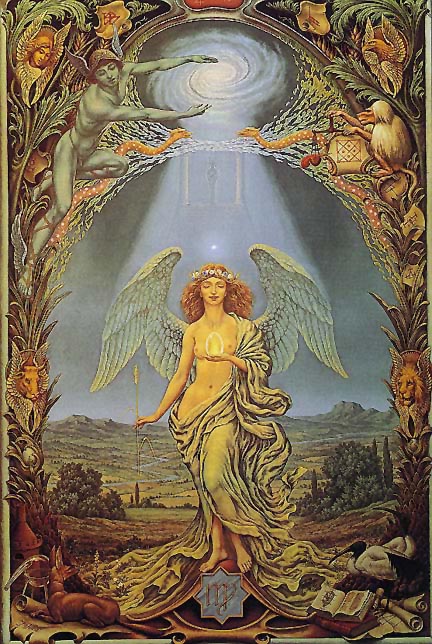
Astrology and how it affects our daily life. Transiting Mercury Moves into Taurus April 2016: Mercury goes retrograde April 28 2016


3D render depicting the Greek God Mercury, messenger of the gods, the god of trade, merchants and travel Stock Photo - 16793380
http://www.123rf.com: Copyright : Linda Bucklin
  • Event: Mercury moves into Taurus

  • Date: April 5 to June 13 2016

  • Time: 7:09 pm (ET) 4:09 pm (PT)

  • Retrograde: Mercury turns retrograde on April 28

cute buffalo head cartoon Stock Vector - 15377114
http://www.123rf.com: Copyright : Masrobbi Alfaridi

What does it Mean? 

  • Mercury is the planet of communications and technology, he is what makes us think. He is also in “charge” of transportation
  • Mercury rules Virgo and Gemini
  • Taurus has to have both emotional and material security to be content
  • Taurus is ruled by Venus, the planet of beauty and money. 
  • Taurus is much slower to act than Aries is… she needs to be sure it’s the best decision, and she takes a bit longer to fully understand what is all involved. 
  • We could be slower on the uptake, and some of us could feel slightly frustrated at the pace…
  • Patience is in the cards for others, it will be easier for you to take your time and mull over your options… for the rest of us, we could be “chomping at the bit” to get going
  • We prefer to stick to what we know now, new ideas or projects or ways of doing things are more challenging to connect with
  • Slow and steady is the way to go now
  • Our thinking will be more on the practical side, tackling abstract issues may not go as well as anticipated. 
  • Some folks may be tempted to view the world through “blinkers” making it awkward for those around them… 
  • Those who have a tendency to be stubborn may be more so… hopefully their loved ones will be understanding and convince them with love and hugs to change their mind if the subject needs to be resolved now. 
  • Money issues could be on the agenda and if they are we are encouraged to take our time with them. 
  • We are more aware of our comfort needs now… so indulge… :) 

Mercury Retrograde: Enters Storm April 21, Goes Retrograde April 28 until May 22: In Storm until June 1 2016;

Try and Avoid the following: 

  • When Mercury is Retrograde or in its storm, it’s not the best time to begin any new projects. Work on the ones that are already in progress.
  • Because Mercury rules communications, technology and transportation, entering into any new legal contracts or signing important papers may not go as planned.
  • Predictions or expectations for or about such issues, (buying a house, signing a lease, a new job, a new study) will not go as planned.
  • If you have to proceed with important situations, be aware that changes are likely.
  • Make sure you find out all you can about everything, and make as many notes as possible. 

Try to follow the recommendations below: 

  • When Mercury is retrograde it’s  the perfect time to re-do and re-visit past issues…
  • Write down your ideas and the time they occurred. 
  • If it comes back on the market put another offer on that house you “lost” after your previous offer:  
  • Redecorate your home or office, check out your policies…
  • Bring up unresolved relationship issues and re investigate possible solutions.
  • Mercury retrograde gives us a second chance… :) 
  • Mercury in storm isn’t as strong as Mercury Retrograde, but it can still have a disappointing or challenging effect. 
Copyright: Greta McKenzie Astrology April/5/2016


From our inbox to you: From Lynne Mctaggart on: Medical profession and the Thyroid Gland

Human Thyroid Gland Stock Photo - 30511389
http://www.123rf.com: 

Copyright : nerthuz

ANOTHER MEDICAL WITCHHUNT

One of the greatest and most far-reaching scandals of modern medicine has to do with the appalling ignorance of doctors about the workings of the glands and hormones that regulate how much energy we have.

The thyroid, a bow-tie-shaped gland at the base of the neck, is our body’s central metabolic regulator, and when it goes awry (as it can in today’s highly toxic environment), it can cause untold mayhem.

Hundreds of thousands of people—including one-sixth of the over-55s, according to one survey—are walking around with undiagnosed underactive thyroid. Half of all women and a quarter of all men will die with an inflamed thyroid.

In fact, undiagnosed thyroid problems may be one of the major elements contributing to such puzzling diseases of the 21st century as myalgic encephalomyelitis (ME), chronic fatigue syndrome (CFS) and fibromyalgia, all now appearing in epidemic numbers.

This becomes all the more serious when you consider that a thyroid gland out of control can sometimes even kill you.

Bad testing
The main reason that doctors have so much trouble diagnosing an underactive thyroid is that they rely on blood tests that don’t tell them about the full state of a person’s thyroid, but only about the levels of thyroid hormone circulating in the blood. These tests also can’t tell them how much thyroid hormone the body is able to use or how much is necessary to ensure an individual’s health.

To make matters even more complicated, a host of conditions and drugs can throw off a thyroxine (thyroid hormone) reading. Just taking the Pill can give a false picture of the state of your thyroid.

Holistic testing
Barry Durrant-Peatfield, formerly a Surrey-based general practitioner in the UK, spent 40 years successfully treating thousands of patients with thyroid problems by ignoring the standard blood tests, taking a careful history of the patient and examining such things as diet, micronutrient status, and allergies and other environmental influences.

He also relied on a simple, non-invasive test developed by Dr Broda Barnes, a thyroid expert, 30 years ago. Dr Barnes, who believed that many people have subtle thyroid disorders that don’t show up on any blood test, publicized a simple, accurate test for both hypo- and hyperthyroid conditions that can be done at home.

Barnes’ test involves recording your basal body temperature (BBT), the body’s lowest temperature during its waking day. This is invariably when you wake up, and before you get out of bed in the morning.

The test entails simply placing a thermometer under your armpit for 10 minutes first thing in the morning, before getting out of bed, for several days and recording the results.

A normal reading ranges from 97.8º to 98.2º F (36.6º to 36.8º C). Anything markedly below this could mean an underactive thyroid; anything markedly higher suggests an overactive one.

Of course, a good doctor will also consider and exclude other causes of a low BBT, as the armpit test is no substitute for a careful and complete history-taking.

According to Dr Durrant-Peatfield, this test has been ignored or derided by many practitioners and authorities. Doctors accustomed to diagnosing from complex quantified measurements like laboratory results tend to suspect anything as simple as a thermometer reading.

Peatfield’s other innovation was to recognize that the thyroid works in tandem with the adrenal glands and to treat them both with natural glandular extract, rather than the synthetic thyroxine generally prescribed by medicine.

Medical witch-hunt
The tragedy is that this reliance on gadgetry blinded medicine to the simple wisdom of Peatfield’s approach. After the millennium, a witch-hunt was instigated to round up all those doctors like Peatfield who refused to diagnose thyroid disorders on the basis of blood tests.

Fourteen years ago, Dr Durrant-Peatfield had his license suspended by the General Medical Council (GMC), the chief medical licensing body in the UK. Although hundreds of his patients sent letters of support to the GMC, these were totally ignored at his hearing. The decision to suspend him had been taken before the final hearing, which declared him a “danger to patients”.

Dr Durrant-Peatfield retired but decided to take his case directly to the public. He compiled all his knowledge on fatigue and how to counter it into a book, called Your Thyroid and How to Keep it Healthy: The Great Thyroid Scandal and How to Survive it, featuring many of his breakthrough ideas about why adrenal gland problems are behind many cases of fatigue and thyroid problems that go unresolved.
As with most areas of medicine, space-age equipment and high-tech lab results are no substitute for taking a good look at patients and listening carefully to their stories. To figure out how to treat some of the most puzzling new illnesses plaguing us nowadays, doctors may have to recover some of the lost art of traditional medicine as was practised by Durrant-Peatfield: learning again how to read the state of a patient’s tongue

From our inbox to you, from The Whitby Public Library on; What’s on for April:

Illustration of a little girl in the library on a white background Stock Vector - 20518176
http://www.123rf.com: 

Copyright : iimages

How-to In 10 is Back!   

How would you like to learn a new skill in just 10 minutes? The How-To in 10 Festival, hosted at five different libraries in the Durham Region, makes learning something new fun, easy, free, and convenient!

The festival will be held at the Whitby Public Library on Saturday, April 30 from 12:00 noon to 4:00 pm. Stations throughout the first floor of the Central Library will teach you a new skill in 10 minutes or less.  With over 25 experts, think of all the things you can learn to do!

AT WPL this year, learn How-To:

And that’s not all! Please visit the How-To in 10 website for more details on what you can learn at your library.

Did You Know?

The Whitby Archives Has Records to Help You Research Your House

Historic photo of homes in Whitby.Along with all the great resources at the Whitby Public Library, did you know the Central Library is also home to the Whitby Archives?

The Whitby Archives holds unpublished, historical records relating to Whitby, Brooklin, Ashburn, Myrtle, and Myrtle Station. It’s a great place to visit if you’re researching your family history, working on a school project or if you have an interest in local history.

One of the most common questions our Archivist is asked is how to research a house. Sometimes the answer is really easy. If you live in a historical home, there is a good chance research has already been undertaken by staff in the Archives or external clients. We might have a folder containing notices or newspaper articles pertaining to your home. If you’re really lucky and the house is considered significant to the Town of Whitby’s history or the house has been designated under theOntario Heritage Act, there will be an architectural and historical report available for consultation.

The majority of houses in Whitby, though, are not so lucky. For many residents, researching their house requires a bit more legwork. The Archives has resources like city directories, phone books, maps, and newspapers which can help determine previous homeowners and/or tenants. Researchers will also want to consult the Ontario County Land Abstract Index which is available on microfilm. These records will provide information about land ownership from the early 1800s until present day (although the Library’s copies only go to 1949). Finally, fire insurance plans provide information on additions, renovations, and building material.

If you’d like to learn more about researching your house, come to our workshop on April 6 at 7:00 pm at the Central Library. Register online for How to Research Your House or by contacting any branch.

We encourage those researching their house to make an appointment with the Archivist so we can best prepare for your visit. Visit our web page to see the Whitby Archives hours of operation.

Upcoming Programs

DVD cover of The Walk.

Free Film Night at the Central Library 
Thursday, April 7
7:00 to 9:00 pm
Meeting Room 1

Join us at the Central Library for a screening of the film The Walk. Twelve people have walked on the moon, but only one man (Philippe Petit played by Joseph Gordon-Levitt) has ever, or will ever, walk in the immense void between the World Trade Center towers. Guided by his mentor Papa Rudy (Ben Kingsley), and aided by an unlikely band of international recruits, Petit and his gang overcome long odds, betrayals, dissension and countless close calls to conceive and execute their mad plan.

This film is rated PG according to the Ontario Film Review Board. Closed captioning will be available.

Registration is required. Register for the Free Film Night online or by contacting any branch.

Avengers Become…Hedgehogs? At the Central Library 
Wednesday, April 20
4:00 to 5:30 pm

Fandom fun!

Captain America: Civil War hits theatres this May. We’re excited and we want to help you wait out the movie release date. Teens in grades 7 to 12, sign up to create your own Avenger book hedgehog. We supply the material, you do the work! Bonus points for helping us recycle used books in honour of Earth Day.

Registration is required. Register for Avengers Become…Hedgehogs? online or by contacting any branch.

Outlander DVD cover.

Outlander Fan Clan Gathering at the Brooklin Branch 
Monday, April 4
7:00 to 8:00 pm

Don your plaid and share your love of all things Outlander: books, TV series and of course, Jamie and Claire!

Enjoy refreshments, a wee blether and the chance to win a door prize.

Registration is required. Register for the Outlander Fan Clan Gathering online or by contacting any branch.

Librarian swimming with a shark_

Hands-On Green Screen at the Brooklin Branch 
Wednesday, April 13
4:00 to 5:00 pm
Brooklin Youth Room (Brooklin Community Centre and Library)

Travel to Paris? Fly over a building? Make the impossible happen with our brand new green screen! Drop by the Brooklin Community Centre’s Youth Room to try out this technology for yourself. This program is open to youth in grades 7 to 12. Participants will have their completed photos emailed to them.

Visit the Town of Whitby’s Youth Rooms web page for more details about the BCCL Youth Room.

No registration required. Just drop in!

Letter blocks.

Construction Zone: Learn, Build and Solve at the Brooklin Branch 
Wednesday April 6, 13, 20 and 27
10:30 to 11:30 am

This interactive program will explore strategies that promote children’s learning with blocks, buildings, and books. Letter Construction, Building Block Blueprints, Duplo Speller Bricks, Block Graphs and more will spark your child’s imagination and creative problem solving abilities.
Caregivers and their children ages 3 to 5 are welcome. This program runs for 4 weeks.

This program is presented in partnership with Joan Gajadharsingh, Early Literacy Specialist fromOntario Early Years.

Registration is required. Register for Construction Zone: Learn, Build and Solve online or bycontacting any branch.

Yellow bird on a branch.

Thickson’s Woods Land Trust at the Rossland Branch 
Wednesday, April 13
2:30 to 3:30 pm

The beauty and serenity of nature is just down the road, tucked away where Thickson Road meets the lake at Thickson’s Woods Land Trust. Come learn more about the history of this beautiful old growth forest and the birds who visit this reserve.

Registration is required. Register for Thickson’s Woods Land Trust online or by contacting any branch.

Photo of sloth.

Make ‘N Take a Sloth at the Rossland Branch
Friday, April 8
11:00 am to 12 noon

Drop in for a few minutes to make a mama sloth and her adorable baby. Caregivers of children under 10 must remain in the library. Please be prepared to assist your child.

Registration is not required. Just drop in!

Book Marks 

New Spring Picture Books 
Book cover of When Spring Comes.
Kevin Henkes, author of numerous picture books including the Caldecott Medal winning Kitten’s First Full Moon, has created a beautiful story to welcome spring. The bright, colourful illustrations in When Spring Comes
show the changes that occur with the arrival of spring. As the story begins,
the reader discovers the world before spring comes, when trees are bare and look like sticks against the sky. Then remarkable changes occur: leaves
and blossoms emerge on branches, grass changes from brown to green, pussy willows grow and new kittens play. Henkes drawings are colourful and playful and capture the wonder of winter falling away and spring’s arrival.

Author of One, Two That’s My Shoe and Apple Pie ABC is back with a fun, cumulative story based on the famous nursery rhyme. The House that Zack Built, takes place on a farm, and Murray’s sense of humour is evident throughout the retelling. A fly buzzes by the house (made of blocks) that Zack built and ends up causing havoc not just with Zack’s house but also with numerous farm animals, including Zack’s dog. The tale incorporates farm animals young children will recognize and by the end, Zack not only comes up with a simple solution to the problem of the buzzing fly, he rights everything that went wrong. It’s a fun read aloud that encourages children to participate with the telling.

Book cover of The SheepOver.Sweet Pea and Friends: The SheepOver by John and Jennifer Churchman

The Sheepover, based on a true story, tells the story of Sweet Pea, a little orphan lamb who has fallen sick. Told through photographs of actual farm animals, Sweet Pea is cared for by Vet Allison, and her friends keep her company as she recovers in the barn. It’s a charming story with large, bright photographs that provide children a close-up look of familiar barn animals (sheep, goat, goose, rooster) who are all worried about Sweet Pea. Children will enjoy the happy ending where Farmer John plans something special for Sweet Pea and her friends.

Bug Zoo features colourful, large illustrations and tells the story of a boy who takes his love of bugs a little too far. Ben loves all sorts of bugs, and after a trip to the city zoo, he decides to start a bug zoo. He catches some and puts them in glass jars, but the next day he notices the bugs aren’t buzzing. Nonetheless, he keeps growing his zoo and after catching a luna moth he learns what is really wrong with his bugs and how he can make them better. It’s fun looking at the many bugs on the pages and the message makes the reader think about how to really care about creatures sharing our world, even the littlest ones
Books, Research and More

Multilingual Matters

DVD cover of NO.

Foreign Film Recommendations 

The Central Library has a large collection of foreign films, including a number of spectacular gems. Have trouble deciding on which flick to choose, or new to foreign films? Here are some recommendations of entertaining fictional stories based on true events.

Cold Fish (Japanese)
No (Spanish)
Manuscripts Don’t Burn (Persian)
Vincere (Italian)
Kon-Tiki (Norwegian)
Burning Bush (Czechoslovakian)
9th Company (Russian)
Violette (French)

Virtual Branch: WPL on the Web

Chalkboard that says Community Information.

Find Community Information on Information Durham  

For all of the power of the internet, sometimes the things closest to home can be hard to find. Take community services. Sometimes it’s difficult to navigate through all of the different services available or know which group to contact when in need. And even if you do, not every organization has a web presence.

Fortunately, there’s a website set up exactly for this purpose.Information Durham, a program of the Durham Region United Way, is a local directory run by professionals in the area, designed to help you find local services and organizations. Looking for legal assistance, a specialty medical clinic, counseling, an environmental conservation group or a food bank? Information Durham is the place to go.

Information Durham is as simple to use as Google. You can enter an organization name or keywords, and you can limit your search by municipality. You can also browse through a list of organizations and broad service categories. It also offers a very cool volunteer opportunity search feature, which is great for high school students seeking volunteer hours or anyone who wants to contribute their time to a cause.

We live in a community full of amazing people and organizations. Learn more about what they have to offer through Information Durham.

From our inbox to you: From Blue Rodeo on: New Dublin Show

SGC Admin: :) Our favorite Canadian Band, Blue Rodeo is heading across the pond to play an acoustic event in Dublin, Ireland…This is sure to be an absolutely fabulous event… check it out if you can… :) 

Image 01

Blue Rodeo Announce Dublin Acoustic Show!

Blue Rodeo is excited to announce a special acoustic show in Dublin, Ireland for this May at The Grand Social!

Tickets are on sale now through Tickets.ie.

This is a rare opportunity to see the band in an intimate setting performing many of your favourite songs. If you’re going to be in Dublin this May, be sure to get your tickets before they’re gone!

Tour Schedule

May 17
Dublin, IE
The Grand Social
Buy Tickets

From our inbox to you, from The David Suzuki Foundation on “Cap and Trade”(Re: emissions)

SGC Admin: We were happy to see this article regarding the proposed “cap and trade” coming to Ontario in 2017. We, like many folk didn’t really understand what “cap and trade” meant, and how it’s implementation is supposed to assist in reducing the negative impacts our present way of life has on climate change.

David Suzuki’s explanation is clear and easy to understand… (unlike the gobble gabble we get from our politicians), and helps the SGC team to see the possible positive affects of such a system. However, we remain adamant in our belief that adding more tax on at the gas pump is not necessary and smacks of an easy tax grab. Until cars are produced that run on alternative energy sources, (such as electric and water) are affordable for the general public, charging/refilling stations are conveniently in place, along with affordable and reliable transit; the public’s choices of transportation are limited. In this respect, the general public should not be subjected to another tax.

Please feel free to add your comments… :) 

Will cap-and-trade slow climate change?

The principle that polluters should pay for the waste they create has led many experts to urge governments to put a price on carbon emissions. One method is the sometimes controversial cap-and-trade. Quebec, California and the European Union have already adopted cap-and-trade, andOntario will join Quebec and California’s system in January 2017. But is it a good way to address climate change?

The program sets an overall limit — a cap — on the amount of greenhouse gas emissions a province can emit. It then tells polluters, such as heavy industry and electricity generators, how many tonnes of carbon each can release. For every tonne, polluters need a permit or “allowance.” So, if a company’s annual limit is 25,000 tonnes, it would require 25,000 allowances. If a company exceeds its limit, it can purchase additional allowances from another firm that, because of its greater efficiency, has more allowances than it needs. This is the “trade” part of the equation.

Although an individual company can exceed its greenhouse gas limit by purchasing credits, the province as a whole can’t. The overall limit is reduced every year, so if the law is followed, cap-and-trade guarantees annual emissions reductions. The declining cap is the system’s great strength and the way it protects the environment.

How effective is it? Although the answer isn’t straightforward, there’s evidence cap-and-trade played a key role in reducing acid rain in the United States. The 1990 Clean Air Act allowed power plants to buy and sell the right to emit sulphur dioxide. Since then, U.S. sulphur dioxide concentrations have gone down by more than 75 per cent. As Nobel Prize-winning economist Paul Krugman wrote in the New York Times, “Acid rain did not disappear as a problem, but it was significantly mitigated.”

Despite this and other successes, some experts are skeptical, arguing that cap-and-trade amounts to little more than a cash grab by government, a tax in everything but name. Others say it’s a mistake to expect climate change can be addressed through markets, when the problem actually requires changing our entire approach to economics, with a commitment to a steady-state economy and an end to the commodification of nature.

Some experts have also noted that the emissions reductions it brings are often modest. A2015 paper in Canadian Public Policy claimed Quebec’s system “is still too weak to meaningfully address the environmental imperatives as outlined in the Intergovernmental Panel on Climate Change’s 2014 Fifth Assessment Synthesis Report, in which fully eliminating carbon emissions is the benchmark for long-term policy goals.” From 2013 to 2014, California’s allowance cap went from 162.8 to 159.7 megatonnes, a drop of less than two per cent.

Ontario’s proposed legislation indicates its program will have some great strengths and a number of shortcomings. It will likely have wide coverage, applying limits on most of the province’s emissions, including those from transportation fuels. (California’s system did not initially include these fuels.)

Ontario is expected to reduce emissions by over four per cent a year — about twice the initial rate of California — and generate $1.9 billion annually from the plan. That money will be invested in “green” projects throughout the province with the goal of reducing carbon emissions even further.

Ontario’s proposal to give away many allowances to big emitters is less encouraging. The government says it will eventually phase out this free disbursement, but in the meantime millions of dollars in government revenue that could be used to support renewable energy and public transit will be lost.

To keep the bulk of fossil fuels in the ground — as scientific evidence says we must — we need a variety of strategies. Cap-and-trade helps reduce emissions and generates billions of dollars for other strategies to address climate change. It also embodies the polluter pays principle. But it’s not enough on its own.

The David Suzuki Foundation and others have long argued that provinces and the federal government should put a price on carbon, through carbon taxes, cap-and-trade or a combination of both. The urgent need to address global warming means provinces that have adopted cap-and-trade need to strengthen it by ensuring emissions drop faster and polluters pay a price that truly reflects the damage caused by carbon pollution.

Written with contributions from David Suzuki Foundation Climate Change and Transportation Policy Analyst Gideon Forman.

Share on FacebookTweet